Apr 9, 2026 | Music Programs
Large Ensemble Concert Series
NIU Jazz Ensemble
Rodrigo Villanueva, Director
Thursday, April 16, 2025
7:00 p.m.
Boutell Memorial Concert Hall
Special Guest: Gabriel Wade on Trumpet
Fat Cat, Mark Taylor
Chris Merino Dominguez on Trombone
Marlowe Galvez on Trumpet
Wilson Kierce on Piano
Jordan Pierson on Alto Saxophone
Ángel Salas Marcano – Flute
“Fat Cat,” composed by Mark Taylor, is a swing-style big band chart written for jazz ensemble. The piece features a driving rhythm section groove, punchy horn lines, and a saxophone soli that highlight the energy of a traditional big band. Built around blues-influenced harmonies and strong ensemble figures, the chart provides opportunities for improvised solos while emphasizing tight sectional playing. Taylor’s writing balances accessibility with musical excitement, making the piece popular among collegiate jazz groups. Today, “Fat Cat” remains a favorite educational chart for developing swing feel and ensemble precision.
Marguerite, Sammy Nestico
Andrew Clark on Lead Trumpet
Jonathan Alanis on Tenor Saxophone
Caleb Webb on Guitar
Malcolm Lile on Flugelhorn
Wilson Kierce on piano
First recorded by the Sammy Nestico Orchestra on his 1986 album Night Flight, “Marguerite” is an energetic Samba written for big band. The piece blends a lively Brazilian groove with Nestico’s signature ensemble writing and strong melodic lines. Auxiliary percussion and a driving rhythm section help create the samba-jazz feel while the horn sections deliver powerful ensemble passages. Known for its rhythmic momentum and colorful orchestration, the chart highlights the interaction between the brass, saxophone, and rhythm sections. Today, “Marguerite” remains a favorite among advanced jazz ensembles and continues to be widely performed.
Drummin' Man, Tiny Parham
Axel Capetillo on Drums
Marlowe Galvez on Trumpet
Wilson Kierce on Piano
John Wolff on vibraphone
“Drummin’ Man”, written in 1939 by Tiny Parham, is a lively swing-era tune made famous by Gene Krupa and His Orchestra that established Krupa as one of the most influential drummers in the history of popular music. After leaving Benny Goodman’s orchestra, Krupa, eager to build his own identity as a drummer and bandleader, adapted “Drummin’ Man” to showcase his energetic style, showmanship, and rhythmic drive. Through the chart, Krupa proved that the drums could be more than just a part of the rhythm section—it could be the star of the show.
Whisper Not, Benny Golson, arr. Michael Abene
Jordan Pierson on Alto Saxophone
Kordale Hill on Acoustic Bass
Caleb Webb on Guitar
Wilson Kierce on Piano
Benny Golson’s “Whisper Not” is a smooth, soulful jazz tune that has become one of his most well-known and lasting pieces. Written in 1956 during Golson’s time with the Dizzy Gillespie Big Band, and it quickly became a favorite among jazz musicians and listeners alike. The song represents the hard bop style—a blend of bebop’s energy with blues and gospel influences—that was popularized by groups like Art Blakey and the Jazz Messengers. When speaking on writing the tune, Golson shared that he wrote the tune in only twenty minutes while at the Storyville club in Boston. While it’s widely debated whether Dizzy Gillespie or Lee Morgan recorded it first, nearly every major jazz artist has performed or recorded this piece over the years. Along with his other classics like “I Remember Clifford,” “Along Came Betty,” and “Killer Joe,” it helped establish Golson as one of jazz’s greatest composers and arrangers.
Frankie's Tune, Bob Mintzer
Morgan Tipton on drums
John Wolff on Percussion
Caleb Webb on Guitar
Marlowe Galvez on Trumpet
Wilson Kierce on Piano
“Frankie’s Tune” is a lively big band piece by composer and saxophonist Bob Mintzer. First recorded on Mintzer’s 1988 album Spectrum, the piece features a bright Mambo-influenced groove combined with Mintzer’s modern harmonies and rhythmic energy. Written to showcase both ensemble precision and individual improvisation, it reflects Mintzer’s ability to blend strong rhythmic feels with contemporary big band writing. Today, “Frankie’s Tune” remains a favorite in jazz ensemble repertoires, performed widely for its energy, sophistication, and infectious groove.
Fast Forward, Les Hooper
Andrew Clark on Lead Trumpet
Devin Mancera on Alto Saxophone
Wilson Kierce on Piano
Caleb Webb on Guitar
“Fast Forward” is a high-energy big band piece composed by Les Hooper in the late 1980s. Written in a fast up tempo bebop style, it features quick saxophone lines, tight brass hits, and driving rhythms that keep the music constantly moving forward—hence the title. The piece shows off Hooper’s clever writing and the band’s precision, with space for exciting solos. It’s both challenging and fun to play, making it stand out as a popular choice for advanced jazz ensembles. Today, “Fast Forward” stands out as one of Hooper’s most energetic and memorable works.
Big Dipper, Thad Jones
Featuring Gabriel Wade on Trumpet
Andrew Clark on Lead Trumpet
Caleb Webb on Guitar
Wilson Kierce on Piano
Axel Capetillo on Drums
Malcolm Lile on Trumpet
“Big Dipper” is a 1966 jazz composition by Thad Jones, written for the newly formed Thad Jones/Mel Lewis Jazz Orchestra and first performed during their debut residency at New York City’s Village Vanguard. The piece is an extended 16-bar blues that fuses Count Basie–style swing with Jones’s modern harmonies and rhythmic approach. Originally commissioned by Count Basie for an album of Jones’s compositions, the project was never completed, with Basie instead encouraging Jones to form his own band. The tune soon became one of the orchestra’s signature works, celebrated for its tight ensemble playing and vibrant brass writing. Today, “Big Dipper” remains a cornerstone of jazz education and it is performed by professional jazz big bands around the world.
Good News, Bob Mintzer
Featuring Gabriel Wade on Trumpet
Andrew Clark on Lead Trumpet
Malcolm Lile on Trumpet
Caleb Webb on Guitar
Wilson Kierce on Keyboard
“Good News,” composed by Bob Mintzer, is a contemporary big band chart that blends elements of jazz and rock. Known for its energetic rhythms and bold horn writing, the piece reflects Mintzer’s modern approach to large ensemble composition. The chart features strong melodic lines, dynamic ensemble passages, and opportunities for improvised solos. Like much of Mintzer’s work, it is written for standard big band instrumentation and emphasizes tight sectional interplay between saxophones, brass, and rhythm section. Today, “Good News” is frequently performed by advanced jazz ensembles for its exciting groove and vibrant modern big band sound.
Ding Dong Ding, Bob Brookmeyer
Gabriel Wade on Trumpet
Wilson Kierce on Piano
First recorded and released in 1980 by Mel Lewis and The Jazz Orchestra, Bob Brookmeyer’s “Ding Dong Ding” uses a recurring three-note bell-like motif that drives the energy and motion of the entire piece. This simple motif is transformed through complex harmonies, changing meters, modulations, and innovative orchestration, all of which give the piece its distinctive character. The result is a bright, fast-paced work that feels both clever and unpredictable, full of Brookmeyer’s trademark humor and creativity. Mel Lewis describes the chart as “Bob’s version of a nursery rhyme,” an appropriate description for a piece that turns a simple excerpt into something darker and more complex.
Prelude to a Kiss, Duke Ellington, arr. Billy Strayhorn
Wilson Kierce on Piano
Devin Mancera on Alto Saxophone
“Prelude to a Kiss” is a 1938 ballad composed by Duke Ellington. At the time, Ellington was exploring more adventurous harmonies and emotionally complex works, moving beyond the dance-oriented swing numbers that had made him famous. Within the context of his catalog, “Prelude to a Kiss” marked his shift toward mood pieces and tone poems, reflecting his growing interest in modern harmonic language. A few weeks after the instrumental version was recorded, publisher Irving Mills and songwriter Irving Gordon added lyrics, transforming it from a purely instrumental piece into a romantic ballad. The composition remains one of Ellington’s most admired works, celebrated for its elegance, harmonic richness, and emotional depth.
Nutville, Horace Silver, arr. Greg Hopkins
Andrew Clark on Lead Trumpet
Gabriel Wade on Trumpet
Jeremy Fort on Bass Trombone
Caleb Webb on Guitar
Wilson Kierce on Piano
Morgan Tipton on Drums
“Nutville” is a 1965 composition by Horace Silver, written for his 1966 album The Cape Verdean Blues. A classic example of Silver’s hard bop style, it draws on blues and gospel influences and features bold, driving rhythms, punchy horn lines, heavy rhythmic accents, and melodic hooks that make the tune both lively and memorable. The album’s official description fittingly calls it a “relentless barnburner,” as it’s a hard-swinging, high-energy closer that showcases the band’s precision and intensity. Today, “Nutville” remains a favorite among jazz musicians and listeners alike, celebrated for its infectious groove and signature Silver style.
This arrangement by Greg Hopkins is the opening track on Buddy Rich’s album The Roar of ’74.
NIU Jazz Ensemble Personnel
Rodrigo Villanueva Conroy, director
Saxophones
Jordan Pierson – Alto
Jimmy Kaphengst – Alto
Jonathan Alanis – Tenor
Nathan Domecki – Tenor
Declan Carter – Bari
Angel Salas Marcano, Flute
Trumpets
Malcolm Lile – Lead
Marlowe Galvez – Second
Fernando Garduño –Third
Zinnia Wedige – Fourth
Trombones
Chris Merino Dominguez – Lead
Ethan Pritchard — Second
Juan Figueroa — Third
Jeremy Fort – Bass
Rhythm Section
Wilson Kierce – Piano
Caleb Webb – Guitar
Kordale Hill – Bass
Morgan Tipton – Drums
John Wolff – Percussion
Gabriel Wade
Little Rock, Arkansas native Gabriel Wade is a versatile trumpeter, pianist, and educator with a rich performance history. He’s shared the stage with iconic ensembles and artists such as the Count Basie Orchestra and Bobby Watson, and Chicago staples like the Clif Wallace Big Band, Tom Garling Jazz Orchestra, Marlene Rosenberg Quartet, and the Afro-Caribbean Jazz Collective. As a sideman, he’s appeared at notable venues and festivals across the Midwest, including the Bop Stop (Cleveland, OH), Merriman’s Playhouse (South Bend, IN), and the Jazz Gallery Center for the Arts (Milwaukee, WI), the Elmhurst Jazz Festival (Elmhurst, IL), and the Chicago Jazz Festival (Chicago, IL). As a bandleader, he has had the pleasure of performing on stages in Arkansas and Illinois, including prominent Chicago venues such as Fulton Street Collective, The Whistler, the Jazz Showcase, and Andy’s Jazz Club.
Recent achievements include qualifying as a semi-finalist in the Jazz Improvisation Division for the International Trumpet Guild’s 2024 and 2025 Ryan Anthony Memorial Trumpet Competition, being selected for the prestigious, donor-funded 2024 Jazz Aspen Snowmass Academy Big Band led by artistic director, Christian McBride, and earning 1st place in the 2024 Tom Williams Jazz Division of the National Trumpet Competition.
He is currently adjunct faculty in trumpet at Harper College.
The NIU College of Visual and Performing arts puts on more than 200 live performances and exhibitions every year.
See what’s coming up next in the School of Music, School of Art and Design, School of Theatre and Dance and the NIU Art Museum.

Nov 5, 2025 | Music Programs
Large Ensemble Concert Series
NIU Jazz Ensemble
Rodrigo Villanueva, Director
Monday, November 17, 2025
7:00 p.m.
Boutell Memorial Concert Hall
Special Guest: Daisuke Kamiuchi, soprano saxophone
Whisper Not - Benny Golson, arr. Michael Abene
Chart: “Whisper Not”
Composer(s): Benny Golson
Arranger(s): Michael Abene
Background:
Benny Golson’s “Whisper Not” is a smooth, soulful jazz tune that has become one of his most well-known and lasting pieces. Written in 1956 during Golson’s time with the Dizzy Gillespie Big Band, it quickly became a favorite among jazz musicians and listeners alike. The song represents the hard bop style—a blend of bebop’s energy with blues and gospel influences—that was popularized by groups like Art Blakey and the Jazz Messengers. When speaking on writing the tune, Golson shared that he wrote the tune in only twenty minutes while at jazz promoter George Wein’s Storyville club in Boston. While it’s widely debated whether Dizzy Gillespie or Lee Morgan recorded it first, nearly every major jazz artist has performed or recorded the tune over the years. Along with his other classics like “I Remember Clifford,” “Along Came Betty,” and “Killer Joe,” it helped establish Golson as one of the greatest composers and arrangers of this genre.
Drummin' Man - Gene Krupa and Tiny Parham, arr. Rich DeRosa
Chart: “Drummin’ Man”
Composer(s): Gene Krupa and Tiny Parham
Arranger(s): Rich DeRosa
Background:
“Drummin’ Man”, written in 1939 by Tiny Parham, is a lively swing-era tune made famous by Gene Krupa and His Orchestra that established Krupa as one of the most influential drummers in the history of popular music. After leaving Benny Goodman’s orchestra, Krupa, eager to build his own identity as a drummer and bandleader, adapted “Drummin’ Man” to showcase his energetic style, showmanship, and rhythmic drive. Through the chart, Krupa proved that the drums could be more than just a part of the rhythm section—it could be the star of the show.
Big Dipper - Thad Jones
Chart: “Big Dipper”
Composer(s): Thad Jones
Arranger(s): Thad Jones
Background:
“Big Dipper” is a 1966 jazz composition by Thad Jones, written for the newly formed Thad Jones/Mel Lewis Jazz Orchestra and first performed during their debut residency at New York City’s Village Vanguard. The piece is an extended 16-bar blues that fuses Count Basie–style swing with Jones’s modern harmonies and rhythmic complexity. Originally commissioned by Count Basie for an album of Jones’s compositions, the project was never completed—Basie instead encouraged Jones to form his own band. The tune soon became one of the orchestra’s signature works, celebrated for its tight ensemble playing and vibrant brass writing. Today, “Big Dipper” remains a cornerstone of jazz education and performance, celebratorily performed by big bands around the world.
Fast Forward - Les Hooper
Chart: “Fast Forward”
Composer(s): Les Hooper
Arranger(s): Les Hooper
Editor(s): N/A
Background:
“Fast Forward” is a high-energy big band piece composed by Les Hooper in the late 1980s. Written in a fast bebop style, it features quick saxophone lines, tight brass hits, and driving rhythms that keep the music constantly moving forward—hence the title. The piece shows off Hooper’s clever writing and the band’s precision, with space for exciting solos. It’s both challenging and fun to play, making it a popular choice for advanced jazz ensembles. Today, “Fast Forward” stands out as one of Hooper’s most energetic and memorable works.
Frankie's Tune - Bob Mintzer
Chart: “Frankie’s Tune”
Composer(s): Bob Mintzer
Arranger(s): Bob Mintzer
Background:
“Frankie’s Tune” is a lively big band piece by composer and saxophonist Bob Mintzer. First recorded on Mintzer’s 1988 album Spectrum, the piece features a bright Latin-influenced groove combined with Mintzer’s modern harmonies and rhythmic energy. Written to showcase both ensemble precision and individual improvisation, it reflects Mintzer’s ability to blend strong rhythmic feels with contemporary big band writing. Over time, it has become one of his most popular charts, admired for its exciting interplay between rhythm and horn sections. Today, “Frankie’s Tune” remains a favorite in the large jazz ensembles’ repertoire, performed widely for its energy, sophistication, and infectious groove.
Prelude to a Kiss - Duke Ellington, Irving Mills, Irving Gordon; arr. Billy Strayhorn
Chart: “Prelude To A Kiss”
Composer(s): Duke Ellington, Irving Mills, Irving Gordon
Arranger(s): Billy Strayhorn
Editor(s): David Berger, Mark Lopeman
Background:
“Prelude to a Kiss” is a 1938 ballad composed by Duke Ellington. At the time, Ellington was exploring more adventurous harmonies and emotionally complex works, moving beyond the dance-oriented swing numbers that had made him famous. Within the context of his catalog, “Prelude to a Kiss” marked his shift toward mood pieces and tone poems, reflecting his growing interest in modern harmonic language. A few weeks after the instrumental version was recorded, publisher Irving Mills and songwriter Irving Gordon added lyrics, transforming it from a purely instrumental piece into a romantic ballad. The composition remains one of Ellington’s most admired works, celebrated for its “Ellingance”, harmonic richness, and emotional depth.
Ding Dong Ding - Bob Brookmeyer
Special guest: Daisuke Kamiuchi, soprano saxophone
Chart: “Ding Dong Ding”
Composer(s): Bob Brookmeyer
Arranger(s): Bob Brookmeyer
Background:
First recorded and released in early 1980 by Mel Lewis and The Jazz Orchestra, Bob Brookmeyer’s “Ding Dong Ding” uses a recurring three-note bell-like motif that drives the energy and motion of the entire piece. This simple motif is transformed through complex harmonies, changing meters, modulations, and innovative orchestration, all of which give the piece its distinctive character. The result is a bright, fast-paced work that feels both clever and unpredictable, full of Brookmeyer’s trademark humor and creativity. Mel Lewis describes the chart as “Bob’s version of a nursery rhyme,” an appropriate description for a piece that turns a simple excerpt into something delightfully complex.
Nutville - Horace Silver, arr. Greg Hopkins
Chart: “Nutville”
Composer(s): Horace Silver
Arranger(s): Greg Hopkins
Background:
“Nutville” is a 1965 composition by Horace Silver, written for his 1966 album The Cape Verdean Blues. A classic example of Silver’s hard bop style, it draws on blues and gospel influences and features bold, driving rhythms, punchy horn lines, heavy rhythmic accents, and melodic hooks that make the tune both lively and memorable. The album’s official description fittingly calls it a “relentless barnburner,” as it’s a hard-swinging, high-energy closer that showcases the band’s precision and intensity. Today, “Nutville” remains a favorite among jazz musicians and listeners alike, celebrated for its infectious groove and signature Silver’s style.
NIU Jazz Ensemble Personnel
Rodrigo Villanueva, director
Devin Mancera, alto saxophone
Jordan Pierson, alto saxophone
Declan Carter, tenor saxophone
Jonathan Alanis, tenor saxophone
Frederick Melki, baritone saxophone
Malcolm Lile, lead trumpet
Duke Allen, second trumpet
Marlowe Galvez, third trumpet
Zinnia Wedige, fourth trumpet
Chris Merino Dominguez, lead trombone
Sean Hamilton, second trombone
Malacai Sanders, third trombone
Rose Mary McClure, bass trombone
Mark Davis, piano
Caleb Webb, electric guitar
Kordale Hill, acoustic and electric basses
Morgan Tipton, drums and vibraphone
Axel Capetillo, drums and auxiliary percussion
Mark Davis
Pianist Mark Davis has been a mainstay on the Milwaukee jazz scene for over 35 years. His performances display a strong sense of tradition, incorporating the innovations of the bebop masters while still keeping an ear to more modern sensibilities. Whether playing solo or backed by a hard-swinging rhythm section, he features unique arrangements of jazz standards as well as originals that bear the influence of jazz icons such as Bill Evans and Bud Powell.
He began classical piano studies at age eight and soon took to improvising and composing. His teachers included Diane Andreoni, Adelaide Banaszynski, and David Hazeltine. He later studied with jazz legend Barry Harris, who remains one of Mark’s primary inspirations as a player and educator. Mark began performing in Milwaukee jazz clubs while still a teenager. He gained early experience playing in groups led by local stars such as Berkeley Fudge, Manty Ellis, and Hattush Alexander. After completing high school, his interest in visual art led him to pursue an art degree from Skidmore College in Saratoga Springs, New York, where he graduated with highest honors in 1990. Mark returned to Milwaukee and taught and served as Chair of Jazz Studies at the Wisconsin Conservatory of Music from 1992-2019. In 2019, he founded the Milwaukee Jazz Institute and currently serves as artistic director. Mark mentors many young, up-and-coming musicians. Many have gone on to successful music careers, most notably Dan Nimmer, who has been the pianist with Wynton Marsalis and the Jazz at Lincoln Center Orchestra since 2005. Currently, Mark teaches lessons in his studio, offers online lessons, presents workshops through the Milwaukee Jazz Institute, and is the jazz piano instructor at Northern Illinois University.
The NIU College of Visual and Performing arts puts on more than 200 live performances and exhibitions every year.
See what’s coming up next in the School of Music, School of Art and Design, School of Theatre and Dance and the NIU Art Museum.
Feb 9, 2022 | Music, Music News, xCVPA, xFeatured
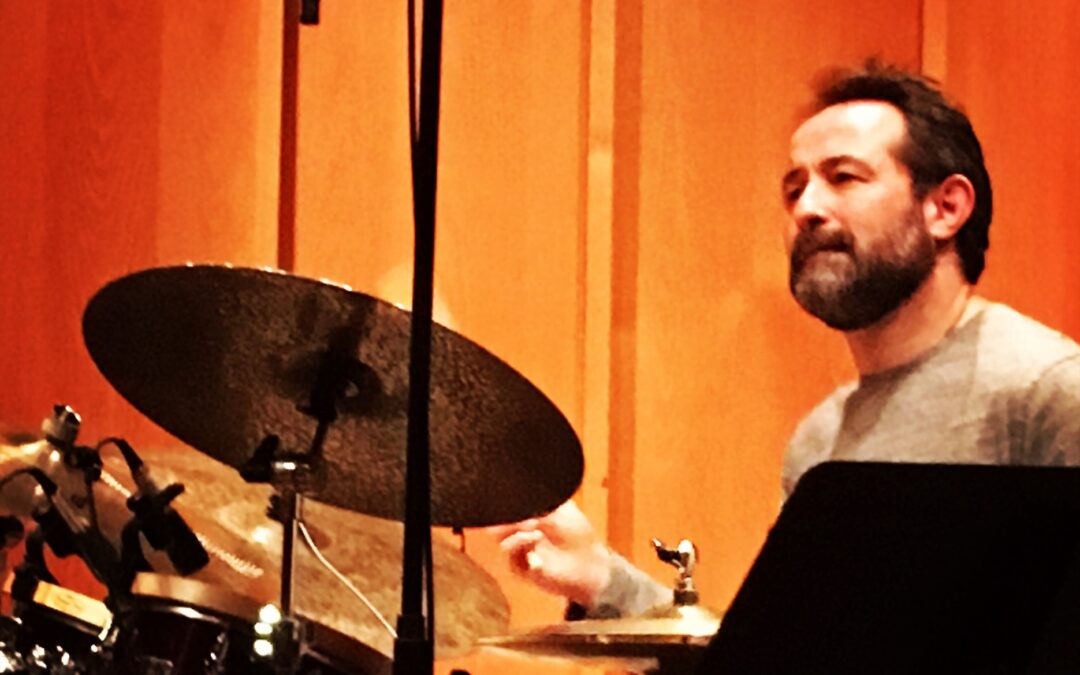
NIU School of Music Professor of Jazz Studies Rodrigo Villanueva has been awarded a Fulbright U.S. Scholar Award to spend four months in Brazil researching Afro-Brazilian rhythms and teaching at two universities, the Universidade Estadual de Campinas (May 1 through June 30, 2022) and Universidade Federal de Pernambuco (July 1 through August 31, 2022). In addition, Villanueva will compose music for drums and percussion based on Afro-Brazilian rhythms, and will write a compendium of Brazilian rhythms for drumset. The title of this ambitious project is “Cracking the Afro-Brazilian Rhythmic Code.”
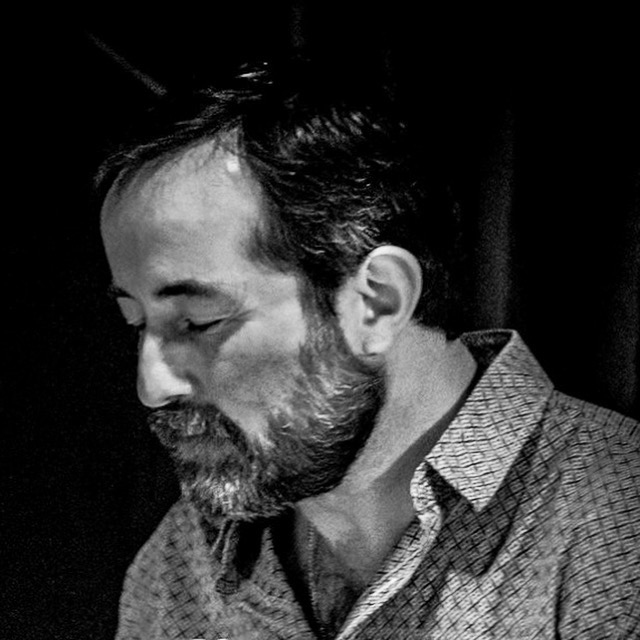
Credit: Leiko Napoli
“As director of the NIU Jazz Ensemble, I have discovered the need for exploration and greater understanding of the vast array of rhythms from Brazil. Through my experiences in this role, as well as in teaching jazz courses, coaching bands in other schools and clinic ensembles at jazz festivals, I have realized that it is my duty as an educator to expand my students’ knowledge and awareness of music styles from other cultures of the African diaspora,” Villanueva said.
As a visiting scholar, Professor Villanueva will teach jazz and Afro-Cuban drumset, and jazz arranging, and he will coach jazz ensembles at both UNICAMP and USPE. “This provides the opportunity to serve as an ambassador, bridging the cultural gap, and connecting North and South American cultures through musical exchange.”
In addition to teaching, Professor Villanueva said his research process will be to seek out some of the finest drummers in Brazil. “Brazil has a very musical culture. Almost everyone I have met in my previous trips to Brazil plays an instrument or sings. Music is everywhere, and percussion is a big part of it. An important part of my project includes studying with legendary Brazilian drummers. Learning the wonderful rhythms of this culture will allow me to elevate Brazilian music genres in the U.S., by incorporating them into my compositions, my arrangements, and of course, in my own playing style. Learning and documenting as many of these rhythms as possible will enable me to publish a compendium of Afro-Brazilian grooves, along with a series of sequenced etudes for drums focused on the Afro-Brazilian rhythmic patterns that are least familiar to North Americans. The solo drumset compositions and percussion ensemble pieces will be geared toward high school and college level percussion students.”
As a Fulbright Scholar, Professor Villanueva will share knowledge and foster meaningful connections across communities in the United States and Brazil. Fulbrighters engage in cutting-edge research and expand their professional networks, often continuing research collaborations started abroad and laying the groundwork for forging future partnerships between institutions. Upon returning to their home countries, institutions, labs, and classrooms, they share their stories and often become active supporters of international exchange, inviting foreign scholars to campus and encouraging colleagues and students to go abroad. As Fulbright Scholar alumni, their careers are enriched by joining a network of thousands of esteemed scholars, many of whom are leaders in their fields. Fulbright alumni include 60 Nobel Prize laureates, 86 Pulitzer Prize recipients, and 37 who have served as a head of state or government.
The Fulbright Program is the flagship international educational exchange program sponsored by the U.S. government, and is designed to forge lasting connections between the people of the United States and the people of other countries, counter misunderstandings, and help people and nations work together toward common goals. Since its establishment in 1946, the Fulbright Program has enabled more than 390,000 dedicated and accomplished students, scholars, artists, teachers, and professionals of all backgrounds to study, teach and conduct research, exchange ideas, and find solutions to shared international concerns. The Fulbright Program is funded through an annual appropriation made by the U.S. Congress to the U.S. Department of State. Participating governments and host institutions, corporations, and foundations around the world also provide direct and indirect support to the Program, which operates in more than 160 countries worldwide.
Jul 31, 2020 | Diversity, Equity, and Inclusion, Music News, xFeatured
In June, as a way of response to and support of, the Black Lives Matter movement, an ad hoc group of faculty in the NIU School of Music began collaborating to craft a statement with the objective that it would direct a path forward for the school, its students, faculty and staff.
 The members of the committee: Reggie Thomas (professor and head of jazz studies), Rodrigo Villanueva (professor of jazz studies), Mary Lynn Doherty (assistant director of the School of Music, associate professor and coordinator of music education), Bobby Broom (assistant professor of jazz guitar and jazz studies), Eric Johnson (professor and coordinator of choral activities), Geof Bradfield (professor of jazz saxophone and jazz studies) Gregory Beyer (professor of music and director of percussion studies)and Andrew Glendening (director of the School of Music and professor of music) sought to create a statement that promised actions they would commit to take.
“The intent,” Thomas said. “Was not to release an obligatory response filled with empty gestures, but a statement of real support and accountability. We wanted to express our desire to be purposefully anti-racist and create measures to hold ourselves accountable. Our statement is meant to be a framework for those in our community to create meaningful change when needed to our teaching, curating and recruiting.”
Glendening said the working group functioned as a “think tank” and he envisions that they will continue to work as a steering committee to develop a web page to report out on the progress of their intended actions.
The eight members of the committee were among those who had previously participated in a Diversity+Equity (CODE) workshop, and Villanueva said their discussions from the very beginning revealed the group was determined to develop a statement that would boldly defend the Black Lives Matter movement and make a commitment to seek real change.
Villanueva said he believes the outcomes from this process would include a commitment to actively engaging in anti-racist actions in a variety of areas from the recruitment of a more diverse body of students, faculty and guest artists, to multi-cultural experiences that proactively facilitate multicultural understanding and programming music that enlightens the minds of students related to social justice, to discussions of the history of civil rights in America and the importance of art—specifically music—as a catalyst towards meaningful social, cultural and economic progress.
“Going forward, our community should expect to see thoughtful programming in our performances that reflects our entire society,” Thomas said. “Students should expect to see language and practices in course materials that have been vetted for any unintended biases. We will hold ourselves accountable and responsible for recruiting efforts that make NIU accessible to all populations.”
Nov 14, 2019 | Music, Music News, xCVPA, xFeatured
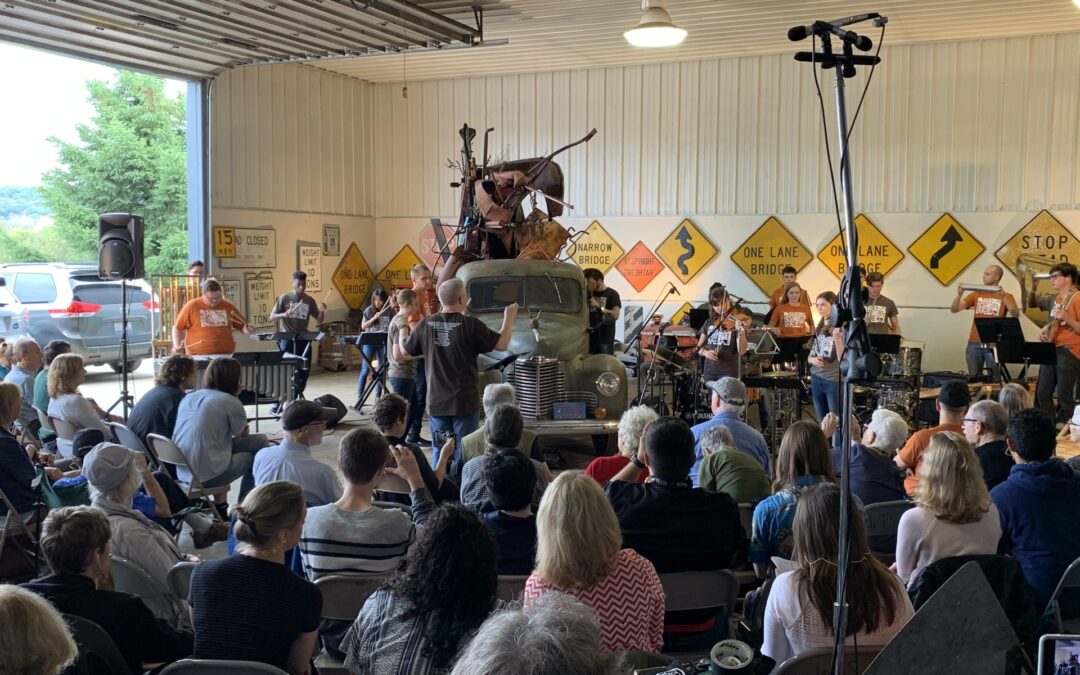
Earlier this fall, a group of School of Music faculty and students traveled to Spring Green, Wisc. to experience an exciting collaboration between percussion performers, composers, and the celebrated American visual artist John Himmelfarb.
(more…)