
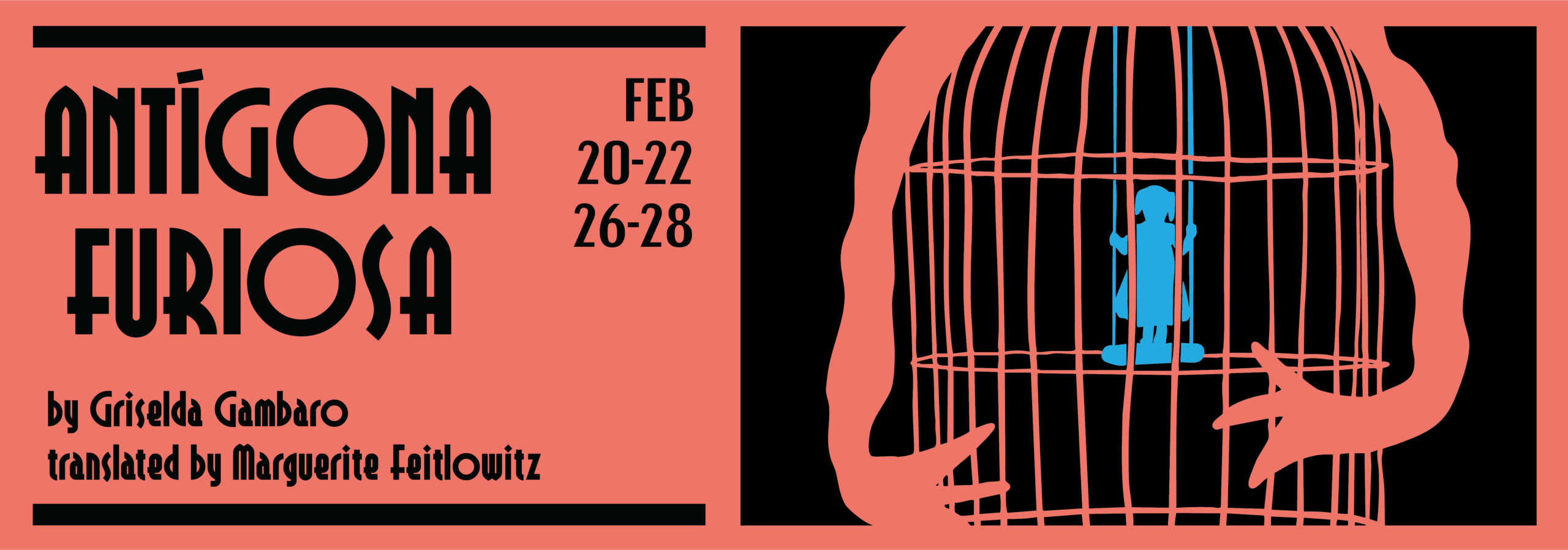
NIU SCHOOL OF THEATRE AND DANCE PRESENTS
Antígona Furiosa
by Griselda Gambaro
Translated by Marguerite Feitlowitz
Directed by Frankie DiCiaccio
Director and Choreographer: Frankie DiCiaccio
Assistant Directors: Antonio Horn and Jamel Hill
Lighting Designer: Ross Wheeler
Assistant Lighting Designer: Bridget Kearbey
Sound Designer: Frankie DiCiaccio
Technical Director: Emery Foster
Properties Designer: Sasha Norman
Dramaturg: Hans Herrera
Stage Manager: Sophia Dimond
Assistant Stage Manager: Maeve Emery
This show is approximately 1 hour 10 minutes with no intermission.
This production includes symbolic depictions of suicide, death, civil war, and political violence.
This performance includes haze, strobe lighting, and loud sounds.
Antígona Furiosa was published in Information for Foreigners: Three Plays by Griselda Gambaro. Edited and translated by Marguerite Feitlowitz, Northwestern University Press, 1992.
CAST
CAST
Antígona
Serenity Deida
Coryphaeus
Mosi Weinberg
Antinous
Summer McDonald
Creon
Sophie Rohr
Haemon
Sebastian Vega-Barrios
Ismene
Nya Warner
DIRECTOR'S NOTE
DIRECTOR'S NOTE
“The responsibility of the artist or intellectual is to refuse to enter into that perverse system of thought in which people become abstractions,”
Griselda Gambaro, in conversation with Marguerite Feitlowitz, BOMB Magazine, 1990.
“It’s been really clear in this timeline that the people are doing a much better job defending core constitutional values than our institutions are right now,” Professor Kate Shaw, Strict Scrutiny podcast, 16 February 2026.
In July of 2010, I stepped off a plane in Buenos Aires, Argentina. I’d read that southern hemisphere winters would be much milder than those I’d grown up with in upstate New York. I packed only a fleece and a thin scarf. Outside, I was pummeled with sleet and freezing cold. It was my first time abroad and the first time I realized that expectation and reality can differ so drastically. We often think we know the story from afar, but through firsthand experience, we meet with truths more nuanced, difficult, and messier than we might’ve hoped.
In Buenos Aires, I studied Argentine literature and read Jorge Luis Borges, Juilo Cortázar, Silvina Ocampo, Manuel Puig, and our playwright, Griselda Gambaro—authors whose worlds can’t be easily mapped; whose realities slip, invert, end, and begin again; whose characters call out from the darkness. I read about Argentina’s history of government repression, the profound violation of rights during the so-called “Dirty War” of the 1970s and 80s, and the 30,000 desaparecidos—the migrants, dissidents, students, intellectuals, artists, and children who were denied due process, kidnapped, tortured, and disappeared by the government. Through this authoritarian strategy, the governing military junta circumvented the law while manufacturing a sense of plausible deniability. As Creon says, “If she wishes to die there, let her die. If she wishes to live hidden under this roof, let her live. We will be cleared of her death…” Societal ambivalence toward life, truth, and justice doesn’t merely permit gross violations, it necessitates them.
More than a decade after my time in Argentina and an entire hemisphere away, I am experiencing a world whose physics and psychology starkly contrast the stories we were once told about it. Here and now, Gambaro’s warnings about power and memory are instructive. She asks us to probe the role of authority, how it is wielded and by whom, and from where it derives power. Gambaro cautions us against the inadequacy of capitulation, fatalism, and acquiescence. Through Antígona, she demands accountability and historical accuracy.
Grief about the state of our world is unmooring, and self-preservation and nihilism have a magnetic pull. We need to ground ourselves in the life-giving, the true, and the just, lest we slide into hopelessness. I am grounded by the work of the Argentine group Las Madres y Las Abuelas de La Plaza, who continue to demonstrate and tell the stories of los desaparecidos, decades after their kidnappings; by local community members who, in the face of increasing personal risk and despite efforts to scapegoat vulnerable neighbors, offer them solidarity and support instead; by the idea of six people, a crew of designers and technicians, and an audience convening to participate in the telling of an ancient story. By the perseverance of the persecuted. By every Antígona.
Despite unthinkable odds, Gambaro urges each of us toward the grounding force of righteous fury—in the service of righteous action.
Frankie DiCiaccio
17 February 2026
DeKalb, Illinois
DRAMATURG'S NOTE
DRAMATURG'S NOTE
Zandstra, Dianne Marie. Embodying Resistance: Griselda Gambaro and the Grotesque. Bucknell University Press, 2007.
CAST BIOS
CAST BIOS
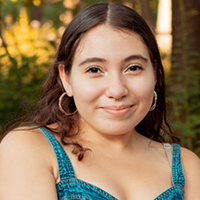
Serenity Deida
Antígona
Serenity Deida (she/her) is a third-year B.F.A. acting major here at Northern Illinois University. She most recently was seen in for colored girls who have considered suicide/ when the rainbow is enuf as Lady Orange and Green, Macbeth as Donalbain/Macduff son ,and Anon(ymous) as Calista/Ritu/Chorus. Serenity would like to thank everyone involved in creating this production especially the director, cast, and crew. Serenity also wants to thank her family, friends and professors who have been so supportive through this artistic journey. Serenity hopes you enjoy the NIU SOTD production of Antígona Furiosa.
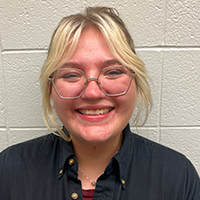
Summer McDonald
Antinous
Summer McDonald (she/her) is in her second year as a B.F.A. actor at Northern Illinois University (NIU). Other roles she’s played include, Metellus Cimber and others in Julius Ceasar, Joe Keller in All My Sons, and Peter Quince in A Midsummer’s Night’s Dream. She’s so thankful to be working on a show as great as Antígona Furiosa and she’s been so grateful for her cast and crew. She would also love to thank, her friends Quinn, Sam, Gavin and Stephanie for always giving her motivation to reach her goals. Her parents, always coming to her aid to support her. Her boyfriend, Gio, for being her backbone when times were tough. And for the audience, thank you for coming out to support us. We hope you enjoy the show.
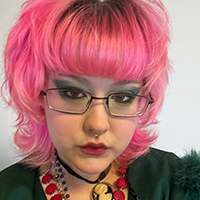
Sophie Rohr
Creon
Sophie Rohr (she/they) is a junior majoring in psychology and minoring in theatre studies. This is their first production at NIU. She has previously been in productions at Palatine High School. They are grateful to be a part of this production, and are happy that they have the opportunity to work with this group of people.
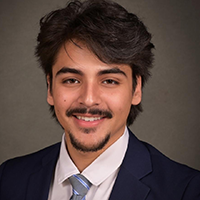
Sebastian Vega Barrios
Haemon
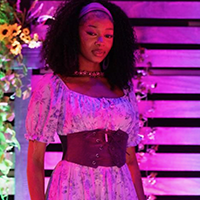
Nya Warner
Ismene
Nya Warner (she/her) is currently a junior pursuing her B.F.A. degree in acting. This will be her fourth production. Nya has previously been cast in Macbeth, Anon(ymous!) , and for colored girls who have considered suicide/when the rainbow is enuf. “It’s been an amazing journey and I’m excited to be a part of another great production!”

Mosi Weinberg
Coryphaeus
Mosi Weinberg is a second-year B.F.A. acting student at Northern Illinois University. Mosi draws on his foundational experience at the Piven Theatre Workshop and the outstanding training he’s receiving at NIU. He has performed in Peter Pan, Emperor’s New Clothes, and many improv shows in Chicago. He is so excited to perform for you all at the show.
PRODUCTION TEAM BIOS
PRODUCTION TEAM BIOS
Frankie DiCiaccio
Director and Choreographer
Frankie DiCiaccio (they/he) is a theatre-maker, educator, and community organizer who splits their time between New York City and DeKalb. At NIU, Frankie has been an Instructor in the School of Theatre and Dance and is currently teaching for the Nonprofit and NGO Studies program. At NIU, Frankie has directed The Walk Across America…, Love and Information, Edward II, and Booked and Blessed…or BUST! Frankie has worked on productions in Chicago (Steppenwolf Theatre Company, Chicago Shakespeare Theater, The Shakespeare Project of Chicago, TimeLine Theatre), Boston (American Repertory Theater, Club Oberon) and New York (The Dare Tactic, LaGuardia Performing Arts, The Shakespeare Forum). Most recently, Frankie directed the world premiere of Kanika Asavari Vaish’s 2nd Murderer with SoHo Shakespeare Company at the Flea Theater in New York City. Frankie has taught and been a guest artist at numerous university theater departments, including Wagner, DePaul, Northwestern, and Adelphi. In addition to theatre, Frankie works with multiple nonprofits and community efforts, including Barb Food Mart (a food pantry serving families in the DeKalb public school district), Common Table DeKalb (a grant-funded series of community-building events that include free meals and story-sharing across DeKalb County,) and DeKalb Migrant Aid (a committee of volunteers striving to welcome immigrants to the area with compassion and meaningful support.) Frankie holds degrees from Northwestern University and the American Repertory Theater/Moscow Art Theater School Institute at Harvard University. Learn more at frankiediciaccio.com
Emery Foster
Technical Director
Sasha Norman
Props Designer
Sasha Norman, Props Designer is a third-year theatre design and technology student who has been working in the theater industry for over a decade. She has collaborated with an independent performer and toured to 45 states, performing at notable venues like the NASA Space Center, Disney World, and with organizations such as the Tampa Bay Lightning, and the Miami Dolphins.
She has served as deck crew chief for numerous productions, including The Wizard of Oz, Beauty and the Beast, and most recently Macbeth. Sasha has also worked on flight crew for Puck in A Midsummer Night’s Dream. She was honored to participate in a two-week intensive study abroad experience at the Antalya Theatre Festival and throughout the Greek Islands.
Sasha is deeply grateful to the props team and for all the hard work everyone has contributed to this production.
Hans Herrera
Dramaturg
Hans Herrera (he/him) is a third-year B.A theatre studies and art history candidate. He has previously served as the assistant director for Accidental Death of an Anarchist with the School of Theatre and Dance, dramaturg for both parts of the Invictus Theatre Company’s Angels in America, wrote A New Life and Equal as We Are for the NIU 24 Hour Play Festival, and serves as a mentor for the NIU Penguin Players. On stage, Hans has appeared as Marullus/Soothsayer/Caesar’s Assistant in Julius Caesar, as well as Jo/Casey in Holler River with the School of Theatre and Dance. He also presented at the American Society for Theatre Research 2025 Conference: Generative Acts, analyzing Chekhov’s Uncle Vanya as a source of ecocriticism in the industrializing Russian Empire. You may have also seen his work with the NIU Foundation, appearing in the Huskies United 2025 campaign trailer, providing voiceover for the Huskies Unleashed promotion, and co-hosting the multi-million-dollar Forward fundraising event. He is eternally grateful for your support in the arts and hopes that you enjoy the show!
Sophia Dimond
Stage Manager
Sophia Dimond (she/her) is a fourth-year B.F.A. acting major here at Northern Illinois University (NIU). This is her first time stage managing, and her last mainstage production at NIU. She has previously been seen in Julius Caesar as Cassius, Holler River as En, and Mary Stuart as Lord Shrewsbury amongst other shows. Sophia is so thankful to the production team and cast for working so hard with her to put together this show. She is also immensely grateful to her friends, instructors, family, and boyfriend for providing constant support during this process and throughout her overall NIU journey. She thanks you for coming and hopes you enjoy Northern Illinois University’s production of Antígona Furiosa!
PRODUCTION STAFF
PRODUCTION STAFF
Scenery
Scenic Coordinator – Sahin Sahinoglu
Scene Shop Supervisor – Adam Rager
Student Technicians – THEA 295 students
Run Crew – Clara Coran, Aubrey McGee
Costumes
Costume Design Advisor – Jeremy W. Floyd
Costume Director – Lori Hartenhoff
Costume Shop Supervisor – Elias Dennis
Lighting
Lighting Design Advisor – Brandon Wardell
Resident Head Electrician – Chris Kurszewski
Lighting Shop Graduate Assistants – Christopher Christ, Ross Wheeler
Lighting Shop Student Employees – Emily Christianson, Reece Deidrick, Conall Doherty, Thomas Readling
Lighting Shop Student Electricians – Crowler Bonomo, Hans Herrera, THEA 210A students
Light Board Operator – Naija Sherwood, Clara Coran
Sound Board Operator – Irismichelle Martinez-Garcia
Properties
Properties Director – Dave Doherty
Properties Shop Employees – Kayleena Lopez, Sasha Norman
Properties Shop 295/395 Students – B. Leni, Jamel Hill, Michael Kocher
Properties Crew – Alice Duncan and Maevelynn Terry
Production Management
Technical Direction Advisor – Tracy Nunnally
Stage Management Advisor – Angela A. Miller
House Managers – THEA 366 and THEA 497 students
Production Promotional Artwork – Cornelia Reed
SCHOOL OF THEATRE AND DANCE FACULTY AND STAFF
SCHOOL OF THEATRE AND DANCE FACULTY AND STAFF
S. Alan Chelser (Emeritus)
Judith Chitwood (Emerita)
Gibson Cima
Roxanna Conner
Stanton Davis
David Doherty
Lila H. Dole (Emerita)
Jasmine Eleazar
Elias Dennis
Jeremy W. Floyd
Paula Frasz (Emerita)
Kent Gallagher (Emeritus)
Kathryn Gately (Emerita)
Alexander Gelman
Richard Grund
Lori Hartenhoff
Jennifer Ingle-Grund
Paul Kassel
Chris Kurszewski
Paige Larkowski
Marc Macaranas
Bethany Mangum-Oles
Kay Martinovich
Terrence McClellan (Emeritus)
Angela A. Miller
Randall Newsom (Emeritus)
Tracy Nunnally
Richard Poole (Emeritus)
Adam Rager
Patricia Ridge (Emerita)
Deborah Robertson (Emerita)
Michel Rodriguez Cintra
Sahin Sahinoglu
Stephanie Sailer
Taryn Sarto
Robert Schneider (Emeritus)
Sarita Smith Childs
Brandon Wardell